April 5, 2025
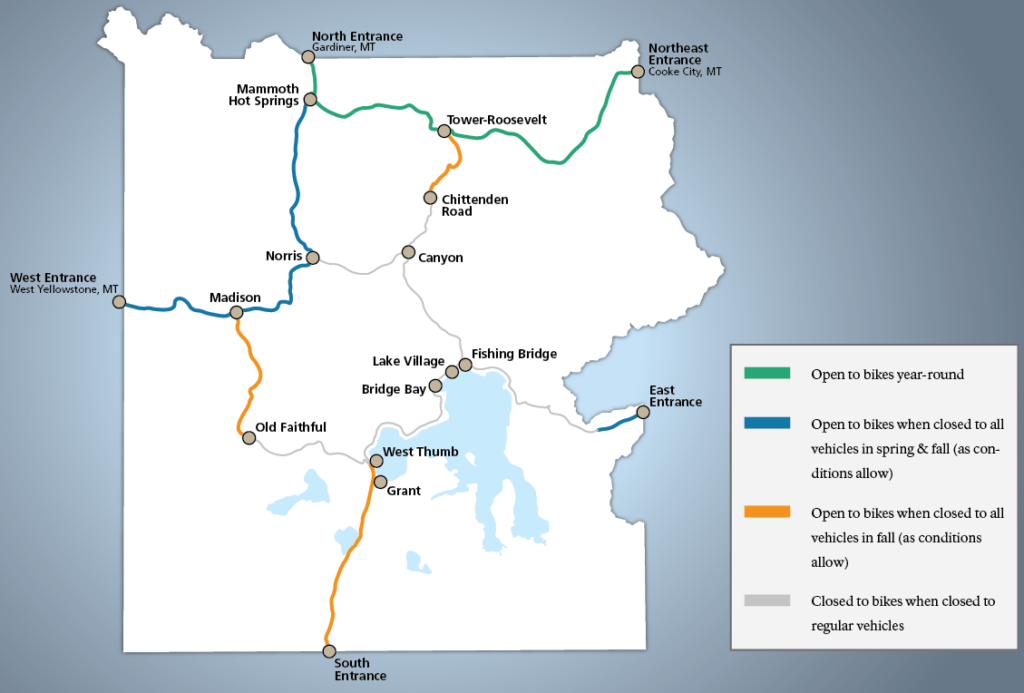
It’s that time of year again…the road through Yellowstone National Park is open to just bikes! But you have to hurry, this 49 mile stretch on Grand Loop Road is only open for three weeks in April.
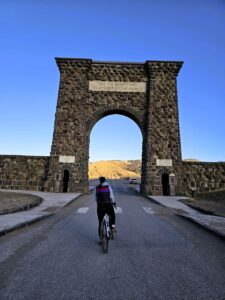
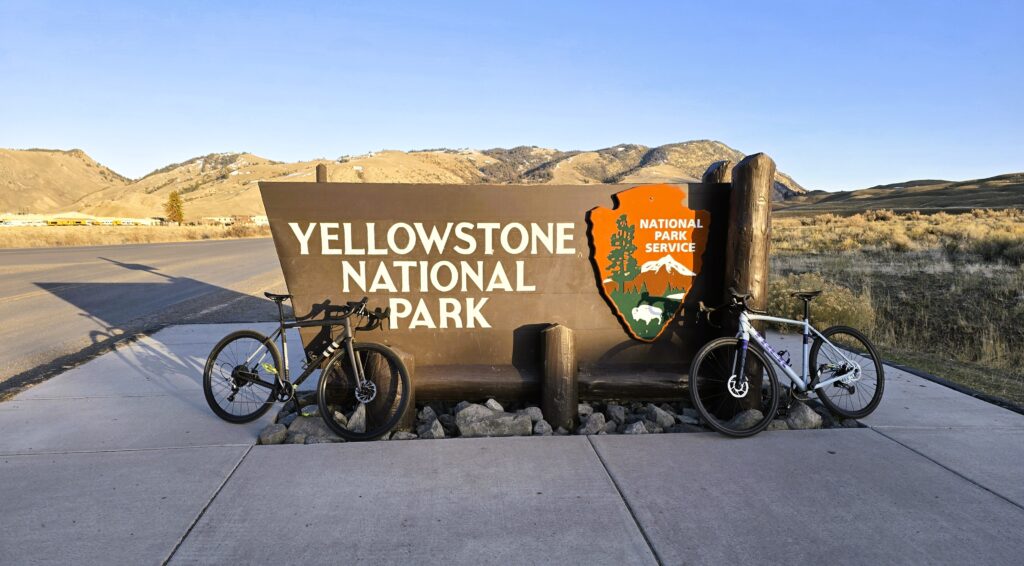
Two years ago we rode the section from West Yellowstone to Gibbon Falls which is about halfway between the Madison and Norris junctions. This year we decided to try the other end of the road from Mammoth Hot Springs to Norris. The North entrance is just through the town of Gardiner, MT. From the entrance, you’ll drive about 6 miles up a steep, winding road to the Upper Terrace parking lot. Keep your eyes peeled for wildlife along the road. We saw a bison sitting right next to the road and Gardiner is notorious for the amount of elk in town.
Not sure if you want to bike the North or West side? Click HERE for my recommendation
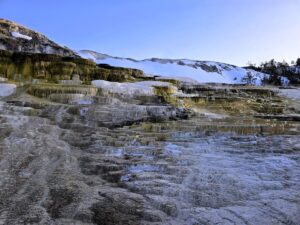
Drive through the small “town” of Mammoth and just keep going until you see a road barrier. There are no services open in Mammoth during the spring season, but there is a bathroom open at the start of the bike ride. I highly recommend stopping at the Lower Terrace parking area before or after the bike to walk the boardwalks and explore the hydrothermal area. I especially enjoy the Mound Terrace.
Hill Alert
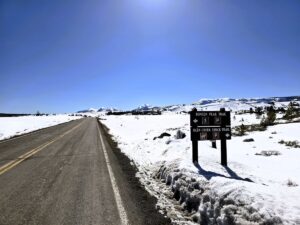
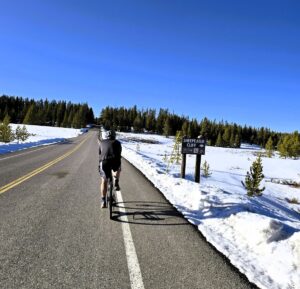
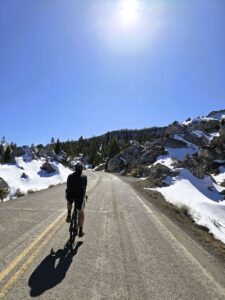
It’s a brutal way to start the ride, but buckle up the first 2.7 miles is a climb. The beginning is just a steady uphill, but watch for gravel in the first mile or two past the barrier. The incline really increases in the last mile. You’ll pass two turnouts which look out to the Golden Gate area and Rustic Falls, but more importantly–they mark the near end of the hill! Bunsen Peak sign on the right is the official end of the elevation gain and you can start to catch your breath.
The next 9 miles are fairly flat. While you’re sight seeing be sure to also watch for craters in the pavement. There were some pretty big potholes in this section. You’ll meander through open sagebrush fields with snow capped mountains off to the right. Once past the Sheepeater Trailhead, the road becomes more tree covered with Obsidian Creek flowing by. There are also a few hydrothermal areas near the road marked by the steam. The exciting part about Yellowstone is that any area has the potential to see wildlife, particularly bison so keep your head on a swivel!
After mile mark 12.5, the ride involves a few more rolling hills. However, climbs are nowhere as steep as the first three miles. The ride from Mammoth to Norris is a steady elevation gain though. The ride back to Mammoth was much quicker. The bad news? It seems like there is a headwind no matter which direction you ride in Yellowstone, so be prepared.
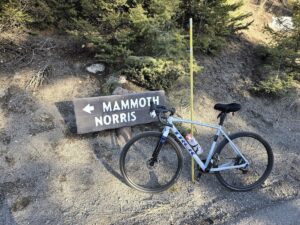
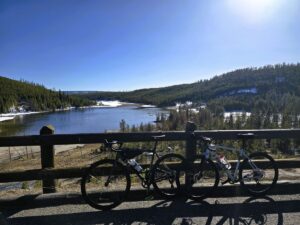
We started our ride a little late in the afternoon, so we had to cut our ride short so we made it back out of the park before sunset. We turned around at Nymph Lake which was 16 miles in, just past Roaring Mountain on the left. Unfortunately we were about 3 miles short of the Norris Geyser Basin, our original goal. We decided to be smart for once and turn back early so we didn’t get stuck in the dark with the park’s wildlife.
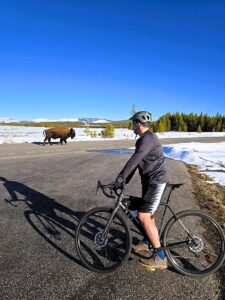
The great news about starting the ride later in the day is that dusk is peak wildlife viewing time. We had yet to see any animals by the time we turned around and I was pretty disappointed. But after 12 miles of riding after our turnaround point, we spotted a giant boulder near the side of the road. The closer we rode, we realized that boulder was actually moving. It was a lone bison walking down the road!
Luckily we met the bison near Swan Lake where there happened to be a turnout. We slowly pulled as far into the turnout as we could and let the big guy clomp by. We were probably 20 yards from the bison and were already making plans for a quick getaway if he charged us. It was both exhilarating and scary all at the same time. Remember though, these are wild animals and it is required to stay a safe distance away from them. Do not try to pet the fluffy cows!
Safe to say we had a lot of adrenaline pumping after that encounter so we flew the rest of the way down the road. Plus we had basically reached the downhill 3 miles at this point so that helped. The sun was officially behind the mountains at this point and the ride down was freezing! I was silly and left my gloves in the car, but I highly recommend bringing gloves, a headband and a windbreaker even if just for the last downhill. I was thrilled when we made it to the car and could start to feel my fingers again. Don’t forget to watch for gravel in this downhill section.
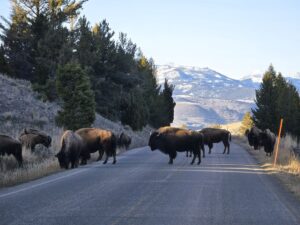
After fueling up with some Starburst jelly beans (our classic riding sugar boost), we drove down to the Lower Terrace parking lot for a quick walk. On our way down, we got stuck in a bison traffic jam which Yellowstone is infamous for. 15 bison were crossing the road, grazing and blocking traffic. We eventually made it through with only a few feet of clearance on each side of the car to spare. We also saw hundreds, and I’m not exaggerating, of elk on our drive to Livingston from Gardiner.
After all those wildlife sightings, we had officially conquered Yellowstone National Park! Mark you calendars for April each year and start planning your ride. Here is where the National Park Service will announce the dates of the road opening every spring or be sure to check Yellowstone’s Instagram.
Check out my full post about riding West Yellowstone HERE!
Yellowstone Travel Tips